Iris Krüger · 13 November 2026
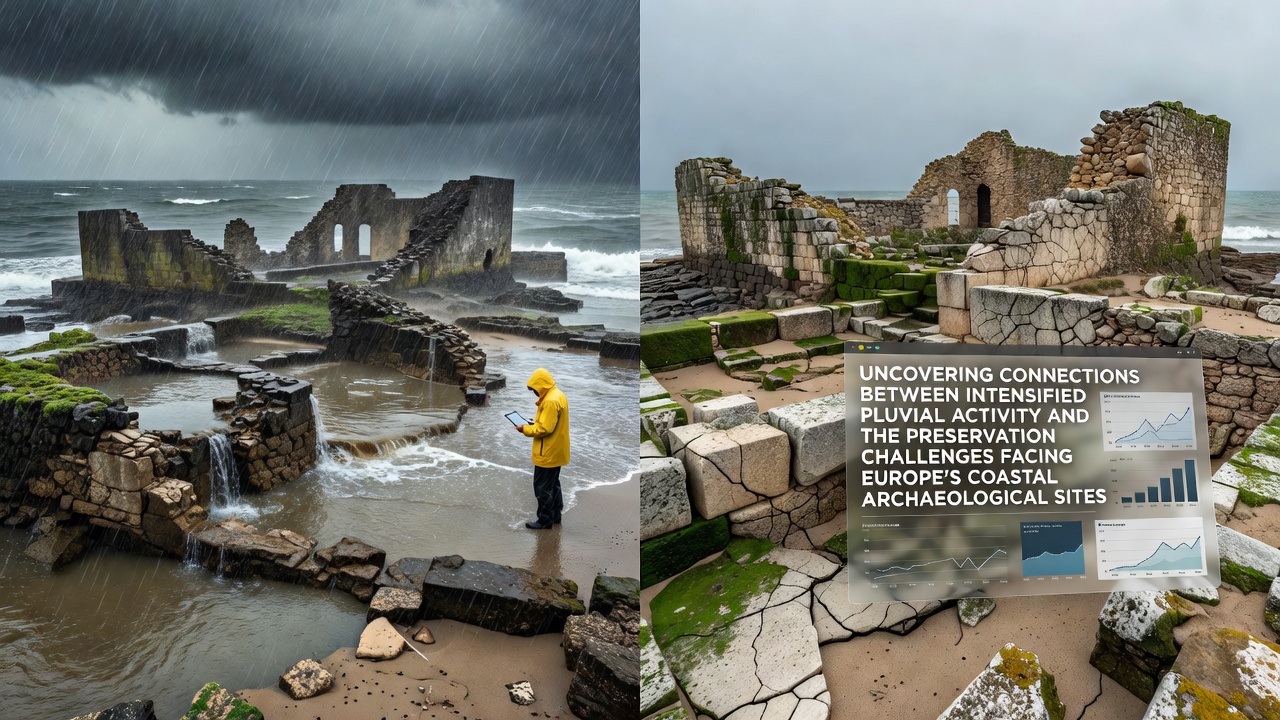
Uncovering Connections Between Intensified Pluvial Activity and the Preservation Challenges Facing Europe's Coastal Archaeological Sites
Intensified pluvial activity has reshaped precipitation patterns across Europe in recent decades, with coastal archaeological sites bearing the brunt of increased rainfall volumes and more frequent extreme events, and researchers have documented how these shifts accelerate erosion while undermining structural integrity at locations from the Mediterranean to the North Atlantic. Data from monitoring networks reveal that pluvial events now deliver higher intensities over shorter periods, which compounds the effects of sea level rise and creates compound hazards for buried remains and standing ruins alike.
Shifting Precipitation Regimes and Their Reach
Climate records indicate that many European coastal zones have experienced measurable increases in annual rainfall totals alongside a rise in the frequency of heavy downpours, and this pattern holds particularly true along the Atlantic facade and parts of the Adriatic where atmospheric circulation changes have favored wetter conditions. Observers note that these trends align with broader atmospheric warming that enhances moisture capacity, allowing storms to unload larger volumes of water in single episodes rather than spreading precipitation more evenly across seasons.
Archaeological sites positioned near current shorelines or on low-lying terraces face direct exposure when runoff channels overflow or when saturated soils lose cohesion, and experts tracking these processes point to measurable losses of sediment layers that once protected artifacts and foundations. In several documented cases, sites previously stable for centuries now require repeated interventions because seasonal rains have begun to exceed the drainage capacity of surrounding landscapes.
Physical Impacts on Structures and Deposits
Heavy rainfall infiltrates masonry and earthen features at coastal sites, causing salts to mobilize and crystallize within porous stones during subsequent drying cycles, and this mechanism accelerates spalling and cracking that weakens walls and pavements. Researchers have recorded accelerated deterioration at Roman and medieval coastal installations where pluvial water carries marine salts inland during storm surges, creating a synergistic decay process that single-factor models had previously underestimated.
Subsurface deposits suffer when intense rains trigger landslides or gullying that strips away protective overburden, exposing organic materials to oxygen and biological attack, and studies of Scottish coastal brochs alongside Greek island sanctuaries illustrate how such events can remove meters of accumulated soil in a single season. Floodwaters also redistribute artifacts across wider areas, complicating stratigraphic interpretation and raising the risk of looting in newly exposed zones.

Monitoring Efforts and Data Integration
European agencies have expanded sensor networks that combine rainfall gauges, soil moisture probes, and structural health monitors at priority sites, and these systems now feed real-time alerts when thresholds linked to pluvial intensity are crossed. Figures released in November 2026 from a multi-national coastal heritage project showed that several Adriatic locations recorded rainfall events exceeding historical maxima by 30 percent, correlating with measurable shifts in wall displacement and increased moisture retention in foundations.
Integration of satellite-derived precipitation data with ground observations allows researchers to reconstruct event sequences and predict which sites will experience the next high-impact episode, and this approach has proven useful in prioritizing conservation resources across national boundaries. Institutions in Canada and Australia have contributed comparative datasets on similar coastal heritage challenges, enabling cross-regional calibration of risk models.
Conservation Responses and Resource Allocation
Preservation teams employ a range of interventions including improved drainage systems, protective shelters, and chemical consolidants designed to stabilize surfaces against repeated wetting, and authorities in Italy and Greece have tested these measures at scale with varying degrees of success depending on local geology and funding levels. European Environment Agency reports detail how coordinated funding streams now support adaptive strategies that combine traditional masonry repairs with engineered solutions for water management.
Yet implementation remains uneven because smaller municipalities often lack the technical capacity to deploy advanced monitoring or to maintain new infrastructure once installed, and international grants have helped bridge some gaps while highlighting the need for sustained local training programs. Those managing sites in Portugal and Ireland have shared protocols for rapid post-storm assessment that reduce the time between event and intervention.
Looking Ahead
Continued observation will determine whether current intensification trends persist or whether circulation shifts moderate rainfall patterns in coming decades, and ongoing projects aim to refine predictive tools that incorporate both pluvial and marine drivers. Evidence suggests that proactive integration of hydrological and heritage data offers the most direct path to protecting vulnerable coastal archives before irreversible losses occur.
Conclusion
Connections between intensified pluvial activity and preservation challenges at Europe's coastal archaeological sites rest on documented physical processes and monitoring records that continue to accumulate, and the evidence points to the necessity of sustained, cross-disciplinary responses that address both rainfall-driven erosion and its interaction with rising seas. Future data streams will clarify the rate of change and the effectiveness of applied measures across different coastal contexts.