Casey Krause · 16 October 2026
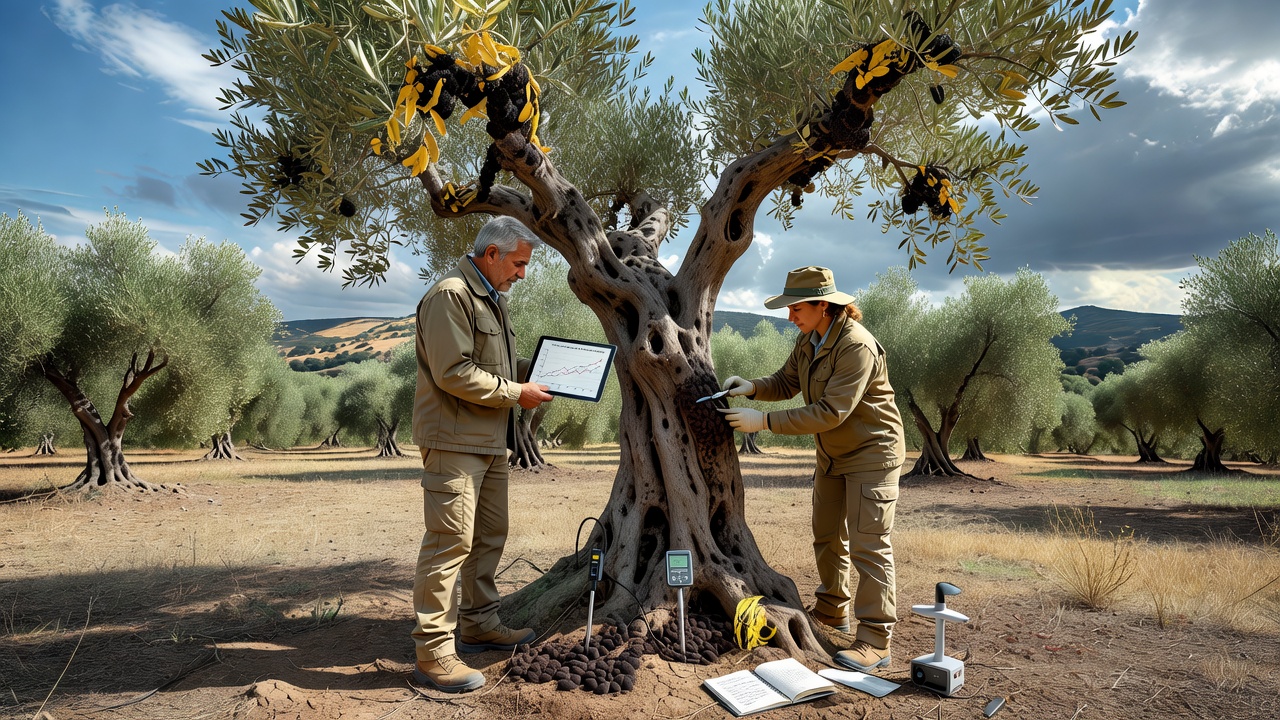
Investigating Links Between Changing Rain Cycles and the Spread of Certain Fungal Diseases in Mediterranean Olive Groves
Researchers across southern Europe have tracked shifting precipitation patterns in olive-growing regions for decades, and recent observations tie these changes directly to increased incidence of fungal pathogens that thrive in altered moisture regimes. Data from monitoring stations in Spain, Italy, and Greece show that traditional seasonal rhythms have given way to longer dry spells interrupted by intense downpours, conditions that favor spore germination and dispersal for several olive-specific fungi. Studies compiled by the European Environment Agency document a measurable rise in autumnal humidity spikes since the early 2000s, and those spikes align with documented outbreaks of diseases such as olive anthracnose and peacock spot.
Precipitation Variability in Key Growing Zones
Long-term records from the Mediterranean basin indicate that total annual rainfall has not necessarily declined everywhere, yet the distribution has become more erratic, with concentrated events replacing steady winter rains in many areas. In Andalusia and Puglia, for instance, weather stations recorded multiple episodes between 2020 and 2026 where more than 100 millimeters fell within 48 hours after months of drought, creating leaf-surface wetness durations that exceed the thresholds required for infection by Colletotrichum species and Spilocaea oleaginea. Satellite-derived evapotranspiration maps further reveal that soil moisture rebounds quickly after such storms, sustaining microclimates inside the canopy that remain favorable to pathogens even when surrounding air dries rapidly.
Primary Fungal Pathogens and Their Moisture Requirements
Three fungi dominate current concerns in commercial groves. Colletotrichum acutatum and related species cause anthracnose, producing sunken lesions on fruit and branches after periods of prolonged leaf wetness exceeding 12 hours at temperatures between 15 and 25 degrees Celsius. Spilocaea oleaginea, responsible for peacock spot, spreads via rain-splashed conidia and establishes infections most readily when relative humidity stays above 80 percent for several consecutive nights. Verticillium dahliae, a soil-borne wilt pathogen, benefits indirectly because heavy autumn rains transport microsclerotia into previously unaffected root zones while also stressing trees through oxygen depletion in saturated soils. Laboratory trials conducted at the University of Córdoba have quantified these thresholds, showing that even brief extensions of wetness duration can double lesion counts on susceptible cultivars.
Field Evidence from 2023 to October 2026
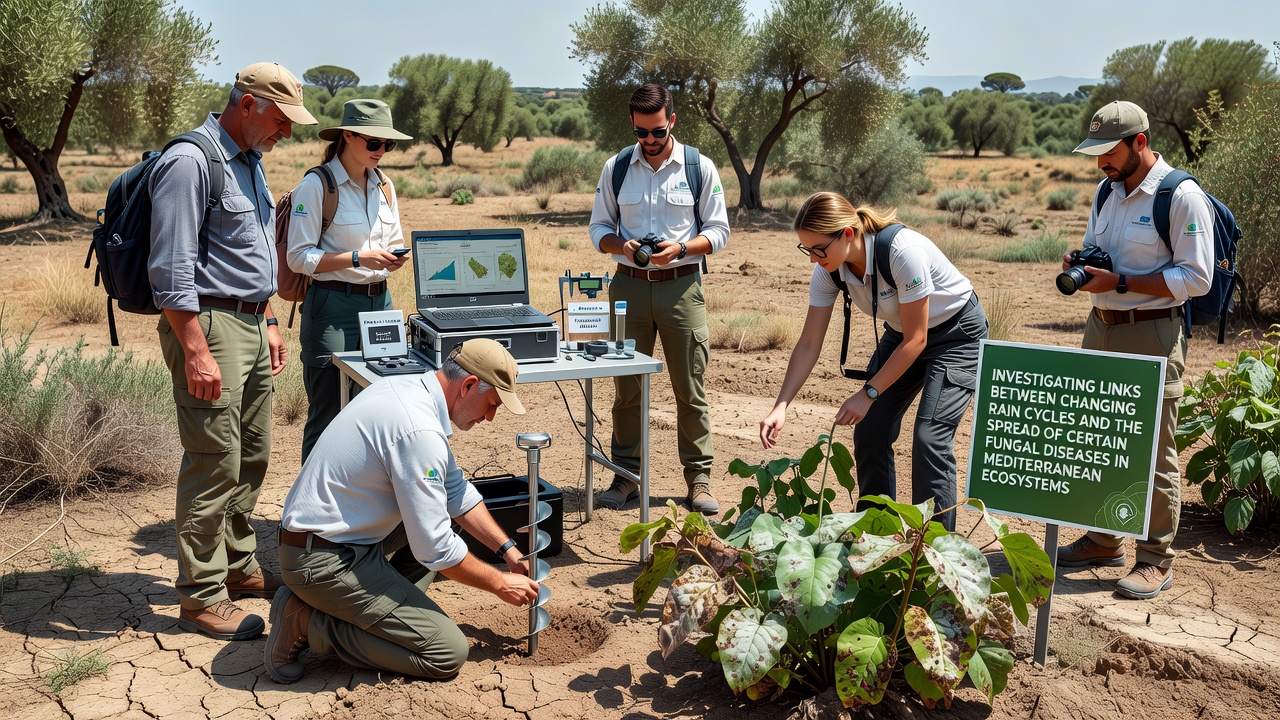
Extension services in Crete and Sicily began systematic scouting programs in 2023 that paired automated weather sensors with visual disease assessments every two weeks. By October 2026 the resulting datasets encompassed more than 180 groves, revealing a statistically significant correlation between the number of days with canopy wetness above 10 hours and the percentage of trees displaying active symptoms. Groves that experienced three or more extreme rainfall events per season showed infection rates 2.4 times higher than those with more evenly distributed precipitation. Researchers noted that the timing of these events mattered as much as their intensity; storms arriving in late September or early October coincided with the period when olive fruit remain most susceptible to latent infections that later manifest as fruit drop.
Mechanisms Linking Rainfall Patterns to Disease Spread
Spore release and transport depend on kinetic energy from raindrops and subsequent film formation on leaf surfaces. When storms become more intense yet less frequent, each event delivers greater splash dispersal distances, carrying inoculum farther within and between trees. At the same time, extended dry intervals allow fungal resting structures to accumulate in leaf litter and soil, creating larger reservoirs that activate during the next wet period. Soil compaction after heavy rain further reduces root aeration, weakening tree defenses and increasing susceptibility to vascular wilt. Models developed by the Joint Research Centre of the European Commission incorporate these variables adn project continued expansion of suitable infection windows under current climate trajectories.
Regional Responses and Management Adjustments
Growers in affected districts have shifted pruning schedules to improve airflow after major storms, and some cooperatives now deploy targeted copper applications timed to predicted wetness events rather than calendar dates. Irrigation systems originally designed for drought mitigation are being recalibrated in places such as central Portugal to avoid adding excess moisture during vulnerable phenological stages. National plant-protection agencies in Italy and Greece have issued updated guidelines that emphasize removal of fallen leaves and fruit immediately after autumn rains, reducing overwintering inoculum loads. These practices rest on empirical observations rather than speculation, and early adopters report measurable reductions in disease pressure when implemented consistently.
Conclusion
Evidence accumulated through October 2026 demonstrates clear associations between altered rain-cycle characteristics and elevated fungal disease pressure in Mediterranean olive groves, driven by extended canopy wetness, intensified splash dispersal, and cumulative stress on host trees. Continued monitoring and adaptive cultural practices remain central to limiting further spread while research institutions refine predictive tools that integrate real-time precipitation data with pathogen biology.