Iris Krüger · 18 September 2026
How Atmospheric Rivers Are Reshaping Water Security Strategies in Southern Europe
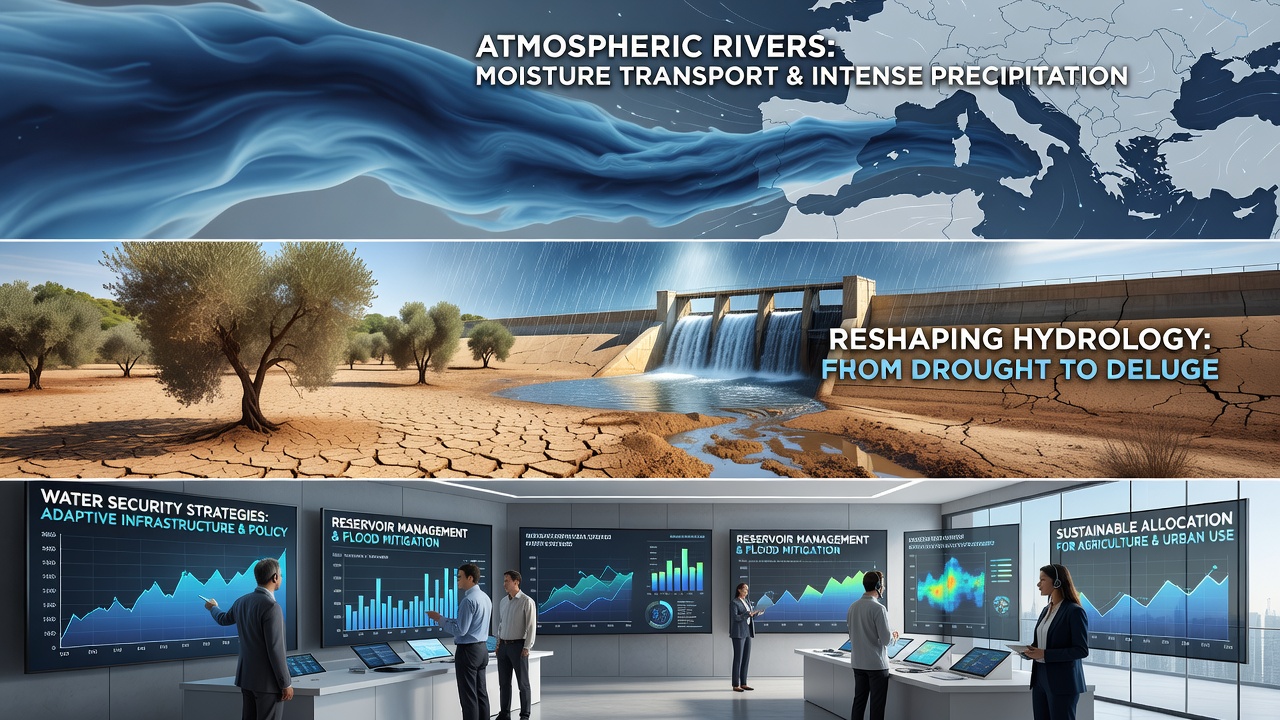
Atmospheric rivers form as elongated bands of concentrated water vapor that stretch thousands of kilometers across oceans and deliver intense precipitation when they reach land, and researchers have tracked their growing influence on precipitation patterns throughout Southern Europe in recent decades. These weather phenomena transport moisture equivalent to several times the flow of major rivers like the Mississippi, which means they can dump massive volumes of rain in short periods while also contributing to seasonal water replenishment in otherwise arid regions. Data from monitoring networks show that atmospheric rivers account for a rising share of extreme rainfall events across the Iberian Peninsula, Italy, and the Balkans, with annual totals in some areas climbing by measurable percentages since the early 2000s. Southern European countries face simultaneous pressures from prolonged dry spells and sudden deluges, so water managers have begun adjusting reservoir operations, drought contingency plans, and agricultural allocations to account for this variability. Experts at institutions such as the European Environment Agency note that these systems often stall over coastal zones, which extends their impact on river basins feeding cities from Lisbon to Athens.Observed Changes in Precipitation Patterns
Long-term records indicate that atmospheric river frequency has increased modestly while their intensity has risen more noticeably, particularly during autumn and winter months when Mediterranean sea surface temperatures remain elevated. This combination produces higher peak flows in rivers such as the Ebro, Po, and Guadalquivir, yet the same events can leave surrounding catchments with depleted soil moisture once the rain passes. Agricultural regions dependent on winter recharge now experience greater year-to-year swings in water availability, prompting irrigation districts to install additional monitoring equipment and revise allocation schedules.
Figures compiled through satellite and ground-based observations reveal that atmospheric rivers contributed roughly 30 percent of total annual precipitation in parts of coastal Spain and southern France during the 2015-2025 period, up from earlier baselines. Such shifts have forced water utilities to integrate real-time moisture transport forecasts into their planning models rather than relying solely on traditional seasonal averages.
Adjustments to Infrastructure and Governance
Authorities in multiple countries have expanded early-warning systems that incorporate atmospheric river tracking, allowing operators to release reservoir storage ahead of forecasted arrivals and reduce downstream flood risk. Spain's national hydrological plan has incorporated atmospheric river diagnostics into its basin management guidelines, while Italy has funded upgrades to levee systems along the Po River that account for the concentrated rainfall these events produce. Cross-border coordination has also grown because many atmospheric rivers affect multiple nations within a single storm track, leading to joint exercises among civil protection agencies.
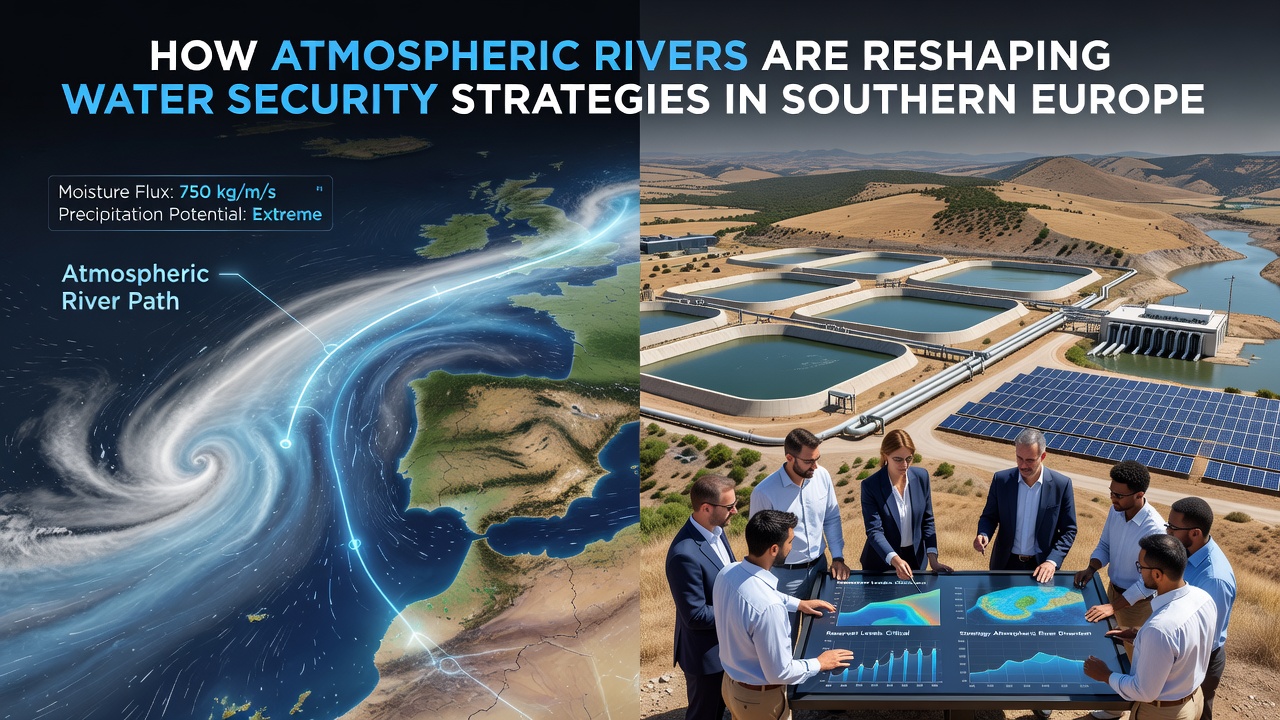
Desalination capacity has expanded along Mediterranean coastlines, particularly in regions where atmospheric rivers deliver most precipitation to upstream mountains rather than to coastal demand centers. This infrastructure provides a buffer when river inflows fall short, yet it requires substantial energy inputs that planners now weigh against projected changes in storm frequency. Groundwater recharge programs have likewise received renewed attention because atmospheric rivers can saturate soils rapidly when they coincide with prior wet periods, allowing excess surface water to percolate into aquifers before it runs off.
Research Developments and September 2026 Milestones
Academic teams across the region have published updated modeling studies that refine predictions of atmospheric river behavior under continued warming, with several papers released ahead of a major water security conference scheduled for September 2026 in Valencia. Those studies emphasize the need for flexible allocation rules that can respond to both multi-year droughts and single-week deluges within the same planning cycle. Observers note that countries maintaining diversified supply portfolios, including recycled water and inter-basin transfers, demonstrate greater resilience during sequences of atmospheric river events followed by extended dry spells.
International organizations such as the World Meteorological Organization have contributed technical guidance on standardizing atmospheric river detection thresholds, which helps Southern European agencies compare data across national borders and refine joint response protocols. These efforts build on earlier work from North American research groups that first mapped atmospheric river dynamics over the Pacific, adapting those methods to the narrower Mediterranean basin where storm tracks interact with complex topography.
Conclusion
Water security strategies in Southern Europe continue to evolve as atmospheric rivers demonstrate their dual capacity to alleviate deficits and trigger flooding within compressed timeframes. Agencies maintain ongoing investments in forecasting, infrastructure hardening, and regulatory flexibility to manage the resulting variability, while research institutions supply updated projections that inform those decisions. The September 2026 conference is expected to consolidate recent findings and outline coordinated next steps across the region.